

Comprehending what occurs behind the spinning reels and the virtual card tables changes a casual pastime into a truly engaging experience https://slotoroscasino.dk/. In Denmark, a mature and well-regulated market, players who discover platforms like Slotoro Casino quickly realize that the real magic is not in levers or lucky charms, but in complex mathematical models and carefully tested software. Every outcome is dictated by complex algorithms created to simulate the unpredictability of physical games while ensuring a verifiable statistical edge for the house over the long run. By stripping away the curtain on randomness, volatility, and return percentages, a player gains a clearer picture of why a session develops the way it does. This awareness does not guarantee a win, but it eliminates the myths that often lead to frustration, substituting them with a deep appreciation for the intricate engineering that powers modern digital entertainment. It is a world where mathematics meets design, creating a structured playground controlled by logic rather than fate.
The Heart of Randomness
The core of every digital game lies in a piece of software referred to as the Random Number Generator, or RNG. It is the digital equivalent to randomizing a deck of cards or rolling physical dice, but it operates at a speed and complexity that is nearly impossible to understand during a live session. The RNG is an algorithmic engine that constantly runs through billions of number sequences every second, even when no one is actively playing. The specific instant a player presses the spin button or calls for a card, the system records the current numerical value from that stream and translates it into a specific game outcome. This ensures that the result is isolated from the server’s load, previous wins, or future jackpots. It does not recall that a slot has been “cold”; it simply computes a fresh set of coordinates based on pure entropy. The technology secures that independence is absolute, making every single event an isolated trial with no influence on what comes next.
The Initial Value and the Algorithm
To appreciate just how resistant these systems are to prediction, one must look at the concept of seeding. The initial value supplied to the RNG is often sourced from a genuinely chaotic source, such as atmospheric noise or the precise timing of hardware operations. This guarantees that the sequence never repeats in a pattern that a human brain or a computer could spot within a lifetime. The visual displays on the screen, the spinning symbols and the bouncing dice, are merely animations playing out a predetermined conclusion. The software already determines the outcome the moment a hand is initiated, and the dramatic unveilings are designed for entertainment value, not for active computation. For players in Denmark, this is a critical consumer protection mechanism, as it guarantees that no operator or third party can influence an individual round. The soundness of the system lies not in concealing the truth, but in making the truth mathematically invulnerable long before the reels stop spinning.
Breaking down Return to Player Rates
The term Return to Player, universally abbreviated as RTP, is typically the most misunderstood metric in the casino environment. It is a hypothetical time average, calculated over tens of millions of simulated rounds, not a per-session promise. If a slot machine at Slotoro Casino shows an RTP of 96.5 percent, it does not mean a player who puts in 1000 kroner will walk away with 965 kroner after an hour. Instead, it means that for every 1000 kroner staked by the entire player base over the game’s duration, the machine is set to retain 35 kroner and return 965 kroner as winnings back to the group. The distribution of that return is strongly skewed; a large chunk is commonly reserved for infrequent, high-value jackpots. This creates a landscape where a considerable percentage of short-term sessions end in a loss, a small number break even, and a tiny fraction result in enormous wins. Understanding this aggregation prevents the player from falling into the trap of chasing losses under the false assumption that the game “owes” money back.
Risk level Shapes the Journey
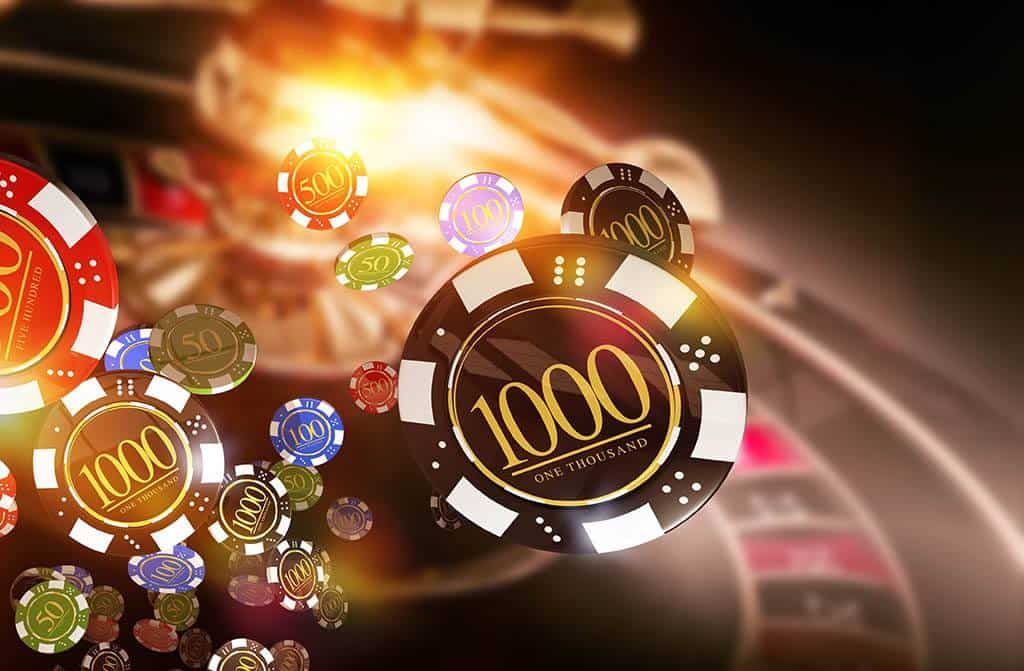
While RTP describes the final outcome, volatility or variance illustrates the picture of the road traveled. A high-volatility slot is designed to deliver long sequences of dead spins or minimal payouts, punctuated sharply by explosive wins that attempt to cover the previous depletion. This model appeals to the psychological thrill of the hunt, appealing to risk-takers who desire the adrenaline of a massive hit. In contrast, a low-volatility game works like a gentle pendulum, providing common but modest wins that keep a bankroll afloat without causing major swings. Developers define these profiles using hit frequency, which determines how often a spin results in any win, irrespective of size. A game with a high hit frequency might trigger a win on 35 percent of spins, creating a constant drip of positive reinforcement. These settings are not hidden; they are buried in the game sheets of a platform like Slotoro Casino, allowing knowledgeable Danish players to align their session budget with their emotional threshold for risk.
The Mathematical Framework of Slot Machines
Beyond the RNG, the underlying logic of a slot machine depends on a virtual reel mapping system that significantly differs from what the eye perceives. A physical slot reel has a restricted number of stops, typically 20 to 22 symbols. A digital slot, though, employs a virtual reel with a massive number of stops, sometimes ranging into the hundreds or thousands per reel. The displayed symbols are just a visual window onto this deeper mathematical matrix. A jackpot symbol might appear to occupy one spot on the visible reel, but in the virtual mapping, it might align with a single number out of 500 stops. This gap allows developers to create games where a life-changing payout appears tantalizingly close on every screen, yet is statistically rare. It is a subtle art of illusion, where near-miss scenarios are designed not as malice, but as a consequence of compressing a massive virtual map into a small visible grid, increasing the tension without changing the absolute odds of the next spin.
Paylines and Ways to Win Mechanics
The progression from the single horizontal payline to the “ways to win” engine marks a key shift in game mathematics. Classic machines required matching symbols to land on a particular pre-drawn line, usually reading left to right. The modern approach left behind these fixed paths entirely. In a 243-ways or Megaways setup, winning combinations are created by landing matching symbols on adjacent reels, regardless of their vertical position. This eliminates the player’s anxiety about “missing” a line. The cost of this coverage is usually baked directly into a fixed base bet, instead of requiring the player to purchase individual lines. The calculation behind each spin multiplies the number of symbols on each reel to generate the total possible ways. When a game boasts up to 117,649 Megaways, it is actively changing the height of the reels on every spin, creating a variable volatility structure where the vast number of winning paths fluctuates wildly from one moment to the next, keeping the mind constantly engaged.
The Principles of Tabletop Games and Real-Time Dealers
While slots depend on virtual mapping, table games function on strict combinatorial probability that has been honed over centuries. The experience on a platform like Slotoro Casino replicates the physical world with absolute precision. In standard digital blackjack, the software emulates a continuous shuffling machine, meaning the cards are mixed after every hand without knowledge of the discard tray. This makes card counting an obsolete impossibility. The strategic element therefore hinges entirely on basic strategy derived against the fixed rules of the dealer. Roulette converts physics into numbers; the virtual wheel uses the RNG to produce a spin speed and a ball drop point, ensuring the distribution matches the expected 1 in 37 probability for European variants. The financial model is maintained not through trickery, but through the green zero pocket, which slightly alters the balance. It is a direct and transparent house edge, markedly distinct from the complex variance of slots, delivering a slower burn where skill in decision-making can directly affect the loss rate over a session.
The Human Element in Live Casino Environments
The rise of live streaming technology introduced a hybrid layer where the RNG takes a backseat to tangible physics, a segment particularly popular by Danish players looking for trust through transparency. In a live casino studio, a real dealer deals with actual cards or a physical roulette ball. The random outcome is created in the physical world and then digitized through Optical Character Recognition technology. Sensors in the table instantly read every card drawn and transform it into data that overlays the player’s screen. This process removes algorithmic skepticism; if the dealer accidentally flips a card, the distortion is noticeable to the human eye. The house edge remains identical, upheld by the immutable rules of the game and the payout structures, not by a hidden code. It is a reversion to mechanical authenticity, yet it merges seamlessly with digital interfaces, allowing for live chat and instant side bets while the physical reality of the spinning ball determines the winner.
Special Features and Its High-Stakes Structure
Modern gameplay mechanics progressively rely on bonus rounds, yet many players are unaware these features are already priced into the core RTP calculation. When a slot features a “free spins” feature, those spins are seldom free in a mathematical sense. The RNG is programmed to take a contribution from all losing base game spins to fund the future bonus round. This is why base game payouts in feature-rich slots often appear punitive compared to classic fruit machines. The software is intentionally banking value, holding it in escrow to distribute later during the high-drama moments. If a game eliminates the low-paying symbols during a free spin round, it is not a generous gift; it is simply the software returning the value the player previously sacrificed. Understanding this redistributed risk model illuminates why buying a direct “bonus buy” feature often comes at a premium multiplier. The provider must charge an entry fee that compensates for the expected statistical return of that feature, ensuring the house edge remains consistent regardless of how the bonus was triggered.
Progressive Jackpot Pools
Progressive jackpots operate on an entirely different economic engine, acting as a networked wealth transfer mechanism. A tiny fraction of every qualifying wager, a seed percentage, is diverted from the player’s bet before the standard RNG check occurs and injected into the prize pool. It climbs across a network of machines or casinos until a specific rare coincidence of symbols activates the drain. The base game RTP during this chase is often significantly lower than a standard non-jackpot slot because a portion of the bet is being transferred to the shared network. The slot functions like a lottery terminal attached to a regular game. For a player in Denmark targeting these pools, the primary variable is the “must-hit-by” mechanism or the seed reset value. Statistically, the optimal time to engage is when the jackpot has grown beyond the cost of the average number of spins required to trigger it, a fleeting condition that turns the house edge momentarily negative, creating a hyper-rare positive expectation environment within the regulated framework.
Budget Dynamics and Gaming Longevity
The relationship between session time and the theoretical erosion of the games is a essential notion for endurance. Every game has a built-in margin, but the speed at which that margin diminishes a budget, known as the “grind”, varies vastly. A slot machine spinning every three seconds processes a bet much quicker than a full table of live blackjack where cards must be dealt and chips counted. This speed is a silent budget killer. A player with 500 kroner playing a 10 kroner round on a 96 percent RTP slot with fast turbo settings can permanently wear down the balance down much sooner than the RTP implies, simply due to the quantity of hands per hour. The method of session sustainability is therefore not about altering the odds, but about tweaking the pace. Reducing the bet size relative to the bankroll increases the number of attempts, leveling the short-term variance and allowing the entertainment budget to withstand the natural droughts that the risk pattern guarantees will occur.
- A fund of 1,000 kroner on 2 kroner plays offers approximately 500 plays before emptiness, giving a strong chance of landing several special rounds.
- The same allocation on 20 kroner rounds yields only 50 plays, rendering the session heavily dependent on a single lucky strike within the first minute.
- Avoiding the “Max Bet” button is a fundamental rule of budget discipline unless the wager makes up a fraction of a percent of the total designated fund.
- Time-based boundaries are often more mentally powerful than loss limits, as they circumvent the human inclination to inflate risk after a abrupt shortfall.
The Future of Gaming Mechanics
The new horizon of play systems in the Danish market involves dynamic, real-time adjustments that tailor the game mathematics to the gambler’s risk level without crossing legal limits. Designers are progressing past static 96 percent RTP graphs toward backend game integration where a studio can adjust volatility on the fly based on user response cycles. A game might detect through player activity signals that a gambler is sinking beneath a frustration threshold and gradually adjust the primary payout rate to supply more psychological triggers, while relatively decreasing the scale of the infrequent big wins to maintain the total return rate within limits. This is not bending the random results, but changing the base math system between various approved modes. The graphical interface remains unchanged, yet the base digital reel array transforms to sustain a state of flow. In this upcoming ecosystem, artificial intelligence acts as a host that harmonizes the mental stimulation graph, ensuring the gaming session feels continuously gratifying, even as the immutable laws of probability maintain the enduring commercial structure steady.
